
A Therapeutic Love Framework
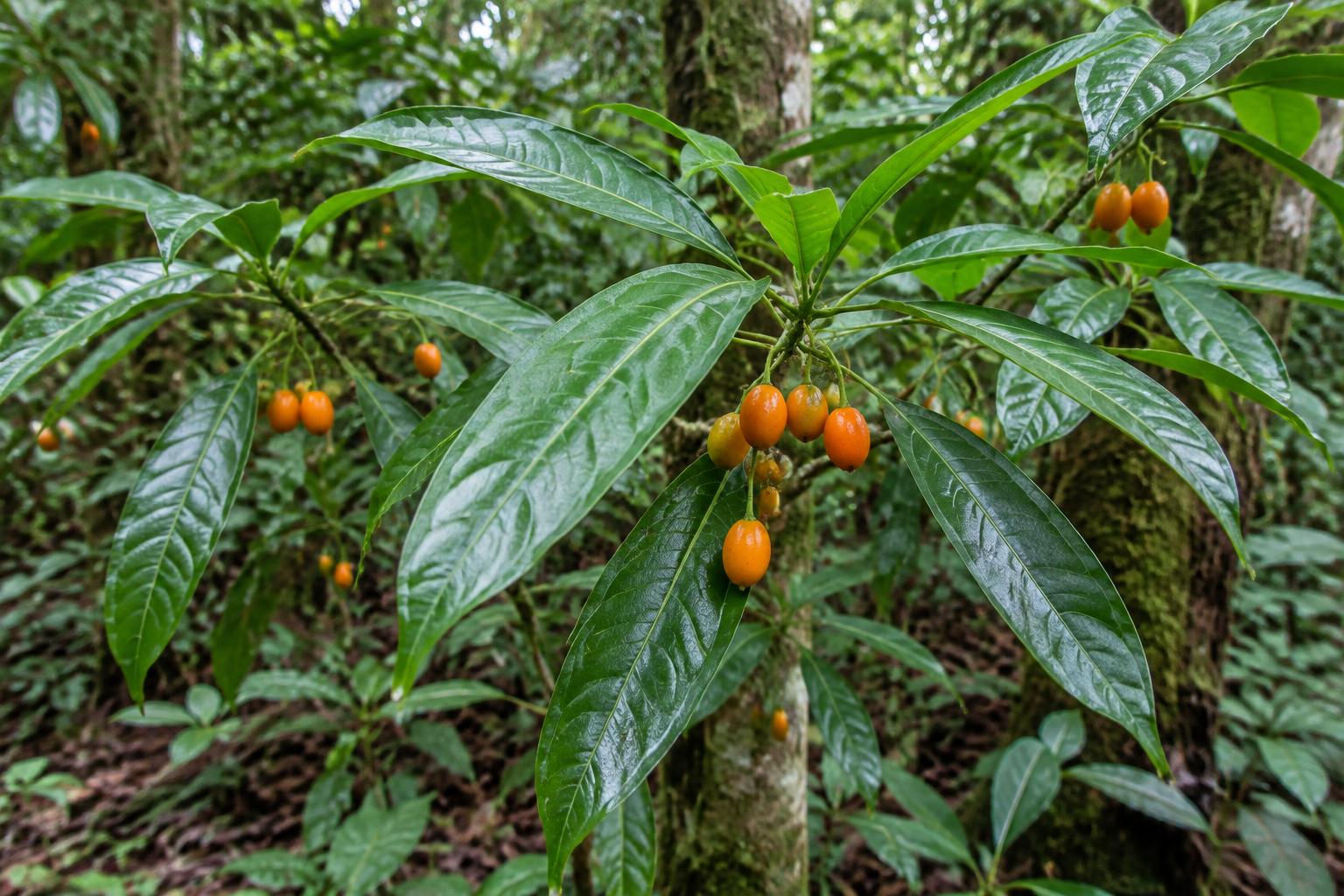
Iboga
Consciousness, the nervous system, memory, and the possibility of transformation
By Doug Bonneville · Founder of Therapeutic Love
What if healing is not simply about changing how we feel, but changing the relationship between consciousness, memory, and the nervous system?
That is the question I want to explore here. Within certain Central African spiritual traditions, particularly the Bwiti traditions of Gabon, iboga has long held a place in initiation, spiritual inquiry, and the exploration of human existence. I want to honor that knowledge without reducing it to a chemical or treating a living tradition as a laboratory technique.
Through Therapeutic Love, I am looking at conscious awareness, subconscious conditioning, emotional memory, autonomic regulation, and the patterns that shape our perception of reality. Not simply a list of symptoms. The whole organism, and its relationship with experience.
Can an altered state of consciousness allow us to observe deeply conditioned patterns without automatically becoming those patterns?
Iboga is a plant containing several alkaloids. Ibogaine is one of those alkaloids. Whole-plant experiences, isolated ibogaine research, and spiritual interpretations are not interchangeable. I keep reported experiences, established physiology, emerging research, and my working hypotheses distinct so we can explore each honestly.
1. The conscious mind and the conditioned nervous system
Our nervous system continuously interprets the world through previous experience. Long before the conscious mind forms a thought, the brain and body may already be preparing a response.
A sound, smell, facial expression, or emotional interaction can activate networks associated with experiences from decades earlier. These responses may involve the amygdala, hippocampus, insula, prefrontal cortex, and autonomic nervous system.
The mind might recognize that an experience is no longer threatening, while the body continues responding through previously learned patterns. To me, that is an important distinction: understanding safety and experiencing safety are not the same thing.
Iboga experiences are sometimes described as producing an unusually clear, observational relationship with autobiographical memory. Rather than simply reliving an experience, a person may feel as though they are witnessing chapters of their life from a different perspective.
What interests me is whether that observational state can create space between a memory and its habitual emotional response. Can we notice the pattern without immediately stepping back inside it?
2. Autobiographical memory and the inner observer
One of the most interesting reported characteristics of iboga is extended, vivid recollection of personal experiences. People describe revisiting childhood memories, significant relationships, difficult decisions, and recurring behaviors with an unusual sense of clarity. A vivid recollection, however, is not independent confirmation that every remembered detail is accurate.
Several systems help us understand the questions we are asking:
- Hippocampus: Contextualizes experiences and contributes to autobiographical memory.
- Amygdala: Participates in emotional learning and assigning significance to experiences.
- Prefrontal cortex: Supports reflection, perspective-taking, and regulation of responses.
- Default mode network: Participates in self-referential thinking and the construction of personal narrative.
- Insula: Integrates internal bodily sensations with subjective emotional experience.
My working hypothesis is that iboga may temporarily change how these systems interact, creating an opportunity to examine our personal narrative without relying entirely on familiar interpretations. I am posing a research question here, not describing an established iboga mechanism.
Consider the difference between “I am an anxious person” and “My nervous system learned an anxious response through experience.” One describes an identity. The other recognizes an adaptation. That shift may be profoundly meaningful.
3. Autonomic conditioning and biological safety
The autonomic nervous system operates through continuously changing patterns of sympathetic and parasympathetic activity. These patterns influence heart rate, respiration, digestion, muscle tension, vigilance, and the body's preparation for action.
When we have spent years anticipating danger, protective responses can become deeply familiar. Even when circumstances change, the nervous system may continue responding according to older expectations.
Within Therapeutic Love, I keep returning to this question: What happens when consciousness begins recognizing protective patterns that the body has been repeating automatically?
Iboga offers a context for exploring whether increased self-awareness can help someone identify the origins and meaning of those responses. But an insight does not necessarily mean the autonomic nervous system has immediately reorganized. Feeling something profound and developing lasting physiological flexibility are related questions, not identical outcomes.
That is why I am interested in what happens afterward, in ordinary life, not only in what happens during an experience.
4. Neuroplasticity and the possibility of new patterns
Neuroplasticity describes the nervous system's capacity to change its connections and functions through experience. Iboga contains several alkaloids, including ibogaine, which has been investigated for effects on neural signaling, learning, and behavior.
Laboratory research involving ibogaine has explored neurotrophic signaling pathways, including GDNF, or glial cell line-derived neurotrophic factor, particularly in relation to substance-use behaviors. That offers a biological direction for investigation. It does not establish that whole-plant iboga produces lasting neuroplastic changes in humans.
For me, the most compelling question is not simply whether new neural connections can form. It is whether new awareness, followed by new experiences, can help reinforce different patterns of response.
- Conditioned experience: Memories, expectations, and automatic responses.
- Expanded observation: Recognizing patterns from a different perspective.
- Reinterpretation: Exploring new meaning and emotional relationships.
- Integration and repetition: Practicing new responses in everyday life.
- Potential nervous system adaptation: Greater flexibility, self-awareness, and response choice.
This is a conceptual pathway I want to investigate, not a guaranteed progression. The experience may open a question; repetition and support give us a way to explore it.
5. Consciousness beyond habitual identity
Iboga invites a question that neuroscience and spiritual traditions approach from different directions: Who is observing our thoughts?
Our identities are built partly through memory, interpretation, and repeated experience. Over time, we may mistake our adaptations for our essential nature. A person who learned vigilance might describe themselves as controlling. Someone who learned to withdraw might identify as emotionally unavailable.
But are these permanent characteristics, or learned strategies?
Experiences of expanded awareness may offer an opportunity to examine that distinction. Within spiritual interpretations of iboga, this inquiry can extend into ancestry, purpose, personal responsibility, and one's relationship with life itself.
I can honor those experiences as meaningful without requiring neuroscience to establish every spiritual interpretation as a biological fact. Respect does not require us to collapse different forms of knowledge into one explanation.
6. The relationship between emotional memory and the body
Memories are not isolated files. Remembering involves networks connecting sensory information, emotional meaning, physiological responses, and personal interpretation. This helps explain why we can understand a past event intellectually while still experiencing a physical response associated with it.
One useful area of inquiry is memory reconsolidation. When certain memories are reactivated, they may become temporarily susceptible to updating under particular conditions. Researchers investigate this when studying how emotional learning can change. Reactivation alone does not guarantee that updating happens.
Could vivid autobiographical reflection associated with iboga create opportunities for new interpretations of previously conditioned experiences? Could those interpretations, reinforced through integration, influence future physiological responses?
These questions connect consciousness research with somatic psychology and psychoneuroimmunology—the study of relationships among psychological processes, the nervous system, and immune function. Applying them specifically to iboga remains a working hypothesis, not a demonstrated outcome.
I want to keep asking what the organism is learning, and how we would recognize a meaningful change over time.
7. Iboga and the human operating system
Within the Owner's Manual for Being Human, I view the organism as interacting systems rather than separate parts. Here is the map I am working with:
- Conscious awareness: Witnessing thoughts, memories, and identity.
- Nervous system: Recognizing conditioned responses.
- Emotional processing: Reexamining meaning and emotional associations.
- Memory networks: Autobiographical recall and possible updating.
- Neuroplasticity: Learning and reinforcing different responses.
- Autonomic regulation: The relationship between awareness and physiological flexibility.
- Spiritual inquiry: Purpose, ancestry, connection, and self-understanding.
The value of this perspective is that it does not reduce human experience to a single chemical pathway. It lets us examine how biological processes, lived experience, and conscious interpretation may interact.
This is a framework for inquiry, not a claim that one plant controls or repairs every system on the map.
8. Questions for self-inquiry and integration
The experience itself is only one part of the inquiry. What we notice afterward, and how we engage with that awareness, may be equally important. These questions can also be explored without taking any substance:
- What patterns in my life have been operating automatically, without my conscious awareness?
- Which behaviors were originally protective adaptations?
- Can I observe a difficult memory without defining myself by it?
- What sensations arise in my body when I revisit particular experiences?
- How does my understanding of myself change when I view my past through compassion rather than judgment?
- What new responses would I like to practice in everyday life?
- How can I distinguish a meaningful realization from a lasting change in my nervous system?
I am not looking for a predetermined conclusion. I am looking for curiosity, compassion, and a relationship with the body that allows us to notice what is actually happening. Integration can include supportive relationships, gentle movement, reflection, and qualified mental-health support. There is no need to force memories or push through overwhelm.
9. The deeper possibility
The most compelling aspect of iboga, within this framework, may be the relationship between the observer and the conditioned self.
A nervous system shaped by years of experience can develop responses that operate long after their original circumstances have passed. The conscious mind may understand those circumstances. Yet understanding alone does not always change the body's response.
Iboga invites us to explore whether an unusual state of awareness can reveal the stories, associations, and protective strategies that have become embedded in our experience of being human.
Perhaps the larger opportunity lies in what happens afterward: when observation becomes understanding, understanding becomes intentional behavior, and repeated experience allows the nervous system to learn something new.
What if the person we believe ourselves to be is partly the accumulated expression of everything our nervous system learned to survive? And what becomes possible when we begin consciously examining those lessons?
That is my central exploration of iboga within Therapeutic Love. Not the pursuit of a particular diagnosis or promised outcome, but an investigation into consciousness, conditioning, and the human capacity for transformation.