A Therapeutic Love Framework
Kambo
The nervous system, conscious awareness, biological communication, and the possibility of transformation
By Doug Bonneville · Founder of Therapeutic Love
What if the body has its own language of intelligence, and some of our most profound opportunities for transformation begin when we learn to listen to it?
Kambo offers a fascinating opportunity to explore the relationship between the nervous system, conscious awareness, physiological responses, and the body's capacity to adapt.
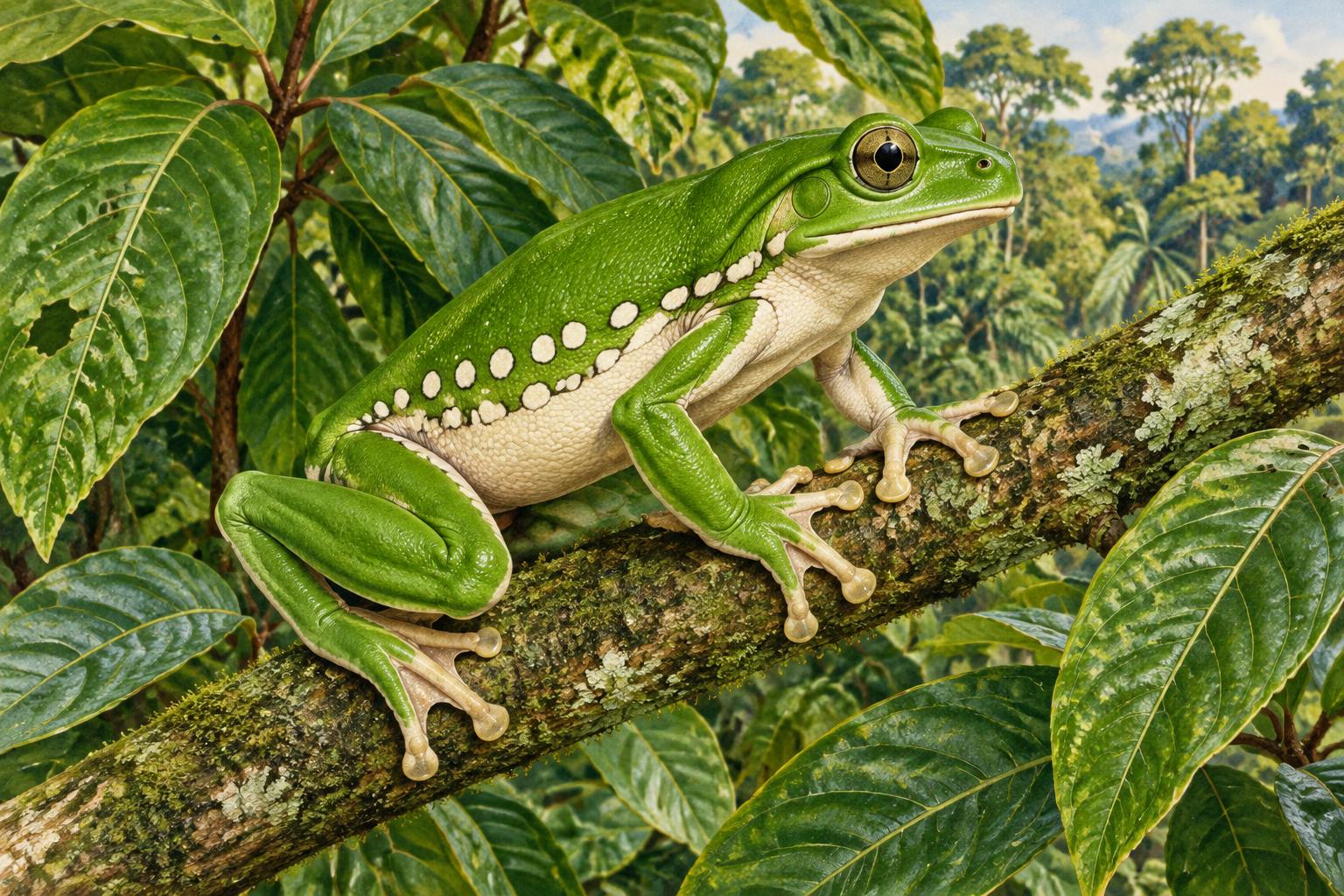
Originating from the Amazon rainforest, kambo is a traditional practice involving the secretion of the giant monkey frog, Phyllomedusa bicolor. Indigenous communities, including the Matsés and other Amazonian peoples, have used it within cultural practices associated with hunting, cleansing, strength, and personal preparation.
Unlike iboga, which is often associated with extended autobiographical reflection and visionary experiences, kambo provides a different avenue of exploration.
Iboga invites us to examine the stories held within consciousness. Kambo invites us to examine how consciousness responds to powerful sensations arising from the body.
Within Therapeutic Love, our interest is not simply in the physical experience, but in the relationship between biological signaling, autonomic responses, emotional conditioning, and the possibility of greater awareness.
1. The nervous system and the intelligence of biological signaling
The human body operates through an extraordinary communication network involving the nervous, immune, endocrine, cardiovascular, and gastrointestinal systems.
These systems continuously exchange information through electrical impulses, chemical messengers, hormones, neurotransmitters, and peptides.
Kambo secretion contains numerous biologically active peptides, including:
- Dermorphins and deltorphins: Peptides with activity at opioid receptors, which participate in pain signaling and neural communication.
- Phyllomedusin: A tachykinin-related peptide involved in smooth-muscle and other physiological responses.
- Phyllokinin: A peptide associated with vascular signaling.
- Sauvagine: A peptide that interacts with corticotropin-releasing factor receptors, connecting it to stress-response signaling.
- Caerulein: A peptide that influences gastrointestinal activity and digestive secretions.
- Adenoregulin: A peptide studied for its interactions with cellular signaling systems.
What makes kambo interesting is that these substances interact with several systems simultaneously.
Rather than examining one isolated pathway, we can explore the body as an interconnected communication network.
The central inquiry becomes:
What can a powerful, temporary change in biological signaling reveal about the relationship between physiological sensation and conscious awareness?
2. The autonomic nervous system and the stress response
Our autonomic nervous system continuously adjusts to internal and external conditions.
The sympathetic and parasympathetic branches participate in regulating circulation, digestion, heart activity, and many other functions.
Kambo produces pronounced physiological effects, including changes in cardiovascular activity, gastrointestinal motility, and bodily sensations.
These effects offer a useful framework for examining the relationship between the autonomic nervous system and conscious experience.
During intense bodily sensations, the mind may generate interpretations based on previous conditioning.
One person may experience strong sensations as something to resist. Another may approach them with curiosity and focused attention.
The underlying physiological event and the conscious interpretation of that event are related, but they are not identical.
This creates an important distinction within Therapeutic Love:
The body's response is one event. The story the conscious mind creates about that response is another.
Learning to recognize that difference may be valuable in understanding habitual patterns of resistance, anticipation, and emotional reactivity.
Importantly, a strong autonomic response is not itself evidence that the nervous system has reset or become better regulated. The possibility we are exploring concerns awareness and subsequent adaptation.
3. Interoception: consciousness listening to the body
Interoception is the nervous system's capacity to detect and interpret internal bodily conditions.
It includes awareness of heartbeat, breathing, temperature, nausea, visceral sensations, and changes in internal physiological state.
The insula, brainstem, anterior cingulate cortex, and other neural networks contribute to this process.
Kambo creates unusually prominent internal sensations, making interoception a particularly relevant concept.
Consider how much of everyday life is spent responding to thoughts while overlooking signals originating within the body.
What happens when bodily sensation becomes impossible to ignore?
The conscious mind is brought into direct contact with physiological activity.
Within this experience, questions may arise:
Can I observe a sensation without immediately assigning it a negative meaning?
Can I recognize the difference between a bodily response and the emotion that accompanies it?
Can I become more aware of how my thoughts influence my experience of physical sensations?
This is where kambo intersects with somatic self-inquiry.
The potential value lies not in assuming that intense sensations are inherently therapeutic, but in exploring what increased awareness of those sensations might teach us.
4. The vagus nerve and the gut-brain relationship
The vagus nerve is a major communication pathway connecting the brainstem with organs including the heart, lungs, and gastrointestinal tract.
Approximately 80% of its fibers are sensory afferents, carrying information toward the brain, although this proportion varies depending on the anatomical context.
This is an important concept within the Therapeutic Love framework.
The brain does not simply issue commands to the body. It also continuously receives information about the body's internal condition.
Kambo's effects on gastrointestinal activity and other visceral processes make the gut-brain relationship particularly interesting.
When the gastrointestinal system becomes highly active, sensory signals are transmitted through vagal and spinal pathways.
These signals influence the conscious experience of nausea, fullness, discomfort, and other internal sensations.
This leads to a deeper question:
Could heightened awareness of gut-brain communication help someone recognize how physical sensations and emotional interpretations influence one another?
The experience provides a context for exploring this relationship, although it does not establish that kambo strengthens or repairs vagal function.
5. The immune system and neuroimmune communication
The immune system is not separate from the nervous system.
Immune cells communicate through cytokines, chemokines, receptors, and other signaling molecules. The nervous system can influence immune activity, and immune signaling can influence neural function.
This two-way relationship is central to psychoneuroimmunology.
Kambo's peptide composition raises interesting questions about interactions between biological signaling and immune-related pathways.
Some peptides found in amphibian secretions have demonstrated antimicrobial or other biological activities in laboratory research.
However, the activity of an isolated peptide in a laboratory is not the same as a demonstrated immune benefit from a kambo ceremony.
Within our framework, the relevant exploration is broader:
How do nervous-system activity, stress signaling, inflammation, and immune communication influence one another?
Could changes in conscious awareness and stress-related behavior influence these systems over time?
What measurable changes would distinguish a short-lived physiological reaction from an enduring adaptation?
These questions allow us to explore kambo alongside psychoneuroimmunology without assuming that the practice produces a generalized immune reset.
6. Emotional conditioning and the relationship with resistance
One of the most compelling aspects of intense somatic experiences is the way they may reveal our habitual responses to discomfort and uncertainty.
The nervous system develops predictive patterns through experience.
If a person has learned that intense bodily sensations signal danger, the mind may rapidly create stories around those sensations.
These interpretations can influence attention, emotion, muscle tension, and subsequent behavior.
Within an experience involving kambo, someone may become more aware of these conditioned relationships.
This invites several questions:
What happens when I notice resistance arising?
Is the resistance connected to the present sensation, or does it resemble a familiar pattern from earlier experiences?
Can I recognize a protective response without making it part of my identity?
The goal of this inquiry is not to override the body's protective signals. It is to better understand the distinction between physiological information and learned interpretation.
Awareness does not require us to fight the nervous system. It gives us an opportunity to understand its communication.
7. Purging, symbolism, and the experience of release
Purging has a significant place within traditional interpretations of kambo.
From a physiological perspective, vomiting and gastrointestinal evacuation involve coordinated activity across the brainstem, autonomic nervous system, and digestive tract.
From a spiritual and personal perspective, people may interpret these experiences as releasing burdens, old patterns, or emotional attachments.
These are different but potentially complementary ways of understanding an experience.
A physical event can carry profound personal meaning without requiring that the symbolic interpretation be treated as a measured biological process.
Within Therapeutic Love, we can explore this through questions rather than predetermined conclusions.
What did I feel I was carrying into the experience?
What emotions arose as the body responded?
Did the experience change the way I relate to a particular memory, relationship, or burden?
Did that change continue into everyday life?
The meaning someone finds in an experience may influence how they subsequently understand themselves and the world.
That meaning deserves thoughtful exploration.
8. Neuroplasticity and the possibility of new responses
Neuroplasticity refers to the nervous system's capacity to change through experience, learning, and repetition.
Kambo has not been established as a neuroplasticity-promoting intervention in humans.
However, the relationship between intense experience, attention, memory, and subsequent behavior provides an interesting area for inquiry.
A person may become aware of a habitual emotional response during an unusual physiological experience.
That awareness could become the starting point for practicing a different response afterward.
The possibility is not that a single experience automatically rewires the nervous system.
It is that an experience may provide new information, and that information may influence future learning.
- Biological signaling: Peptide activity and physiological responses.
- Heightened interoception: Increased awareness of internal sensations.
- Conscious observation: Recognizing emotional and behavioral patterns.
- Reflection and integration: Exploring meaning and practicing different responses.
- Potential adaptation: Greater awareness and flexibility in responding to experience.
This represents a conceptual model for self-inquiry, not an established clinical sequence.
9. Kambo and the human operating system
Within the Owner's Manual for Being Human, kambo can be examined through multiple interconnected systems.
- Conscious awareness: Observing the relationship between sensation and interpretation.
- Autonomic nervous system: Understanding sympathetic and parasympathetic responses.
- Vagus nerve: Gut-brain signaling and visceral sensation.
- Immune communication: Neuroimmune pathways and peptide biology.
- Endocrine signaling: Stress-response communication.
- Emotional conditioning: Recognizing learned reactions to bodily sensations.
- Neuroplasticity: Learning and reinforcing new patterns after an experience.
- Spiritual inquiry: Cleansing, release, intention, and personal meaning.
The underlying principle is that no single system operates independently.
Our biology continuously communicates with itself, while consciousness interprets the experience of being alive.
10. Questions for self-inquiry and integration
- What relationship do I have with physical discomfort, uncertainty, and the unknown?
- When my body produces a strong sensation, what story does my mind immediately create?
- Can I distinguish the sensation itself from the meaning I assign to it?
- What familiar emotional patterns become visible when my attention turns inward?
- What does the concept of release mean to me physically, emotionally, and spiritually?
- Did the experience change my relationship with any memories or previously held beliefs?
- What changes, if any, remain present in my everyday responses?
- How might I cultivate greater communication between conscious awareness and the body's internal signals?
11. The deeper possibility
Kambo invites us to examine something fundamental about the human experience.
The body is constantly communicating through sensations, chemical messengers, neural impulses, and physiological responses.
Much of that communication occurs outside conscious awareness.
Yet the conscious mind continually interprets these signals, often through the lens of previous experience.
Within Therapeutic Love, the deeper exploration is whether becoming more aware of this communication can help us distinguish our biological responses from the identities and stories we have built around them.
Iboga may invite us to witness the narrative of our lives through memory and reflection.
Kambo offers a different perspective: an opportunity to examine our relationship with the living, sensing body.
Both lead us toward a similar question.
Are we simply the sum of our conditioned responses, or can conscious awareness help us develop a different relationship with those responses?
Perhaps transformation begins when we recognize that the nervous system is not working against us. It is continuously communicating, adapting, and attempting to respond to the conditions it encounters.
And perhaps one of the most important skills we can develop is learning to listen.
Therapeutic Love — Modern Science, Ancient Wisdom, and Biological Safety
An exploratory framework examining kambo through consciousness, interoception, nervous-system communication, and the human capacity for learning and adaptation.