
A Therapeutic Love Framework
Sananga
Consciousness, the nervous system, sensory perception, and the possibility of transformation
By Doug Bonneville · Founder of Therapeutic Love
What if the way we see the world is influenced not only by our eyes, but by the experiences, emotions, and conditioned responses through which our nervous system interprets reality?
Sananga offers a fascinating opportunity to explore the relationship between vision, sensory perception, conscious awareness, the autonomic nervous system, and the body's response to intense sensory stimulation.
Within several Amazonian Indigenous traditions, particularly among communities such as the Yawanawá, Kaxinawá (Huni Kuin), and Matsés, plant-based eye preparations have been used in contexts associated with hunting, visual clarity, spiritual cleansing, and traditional healing.
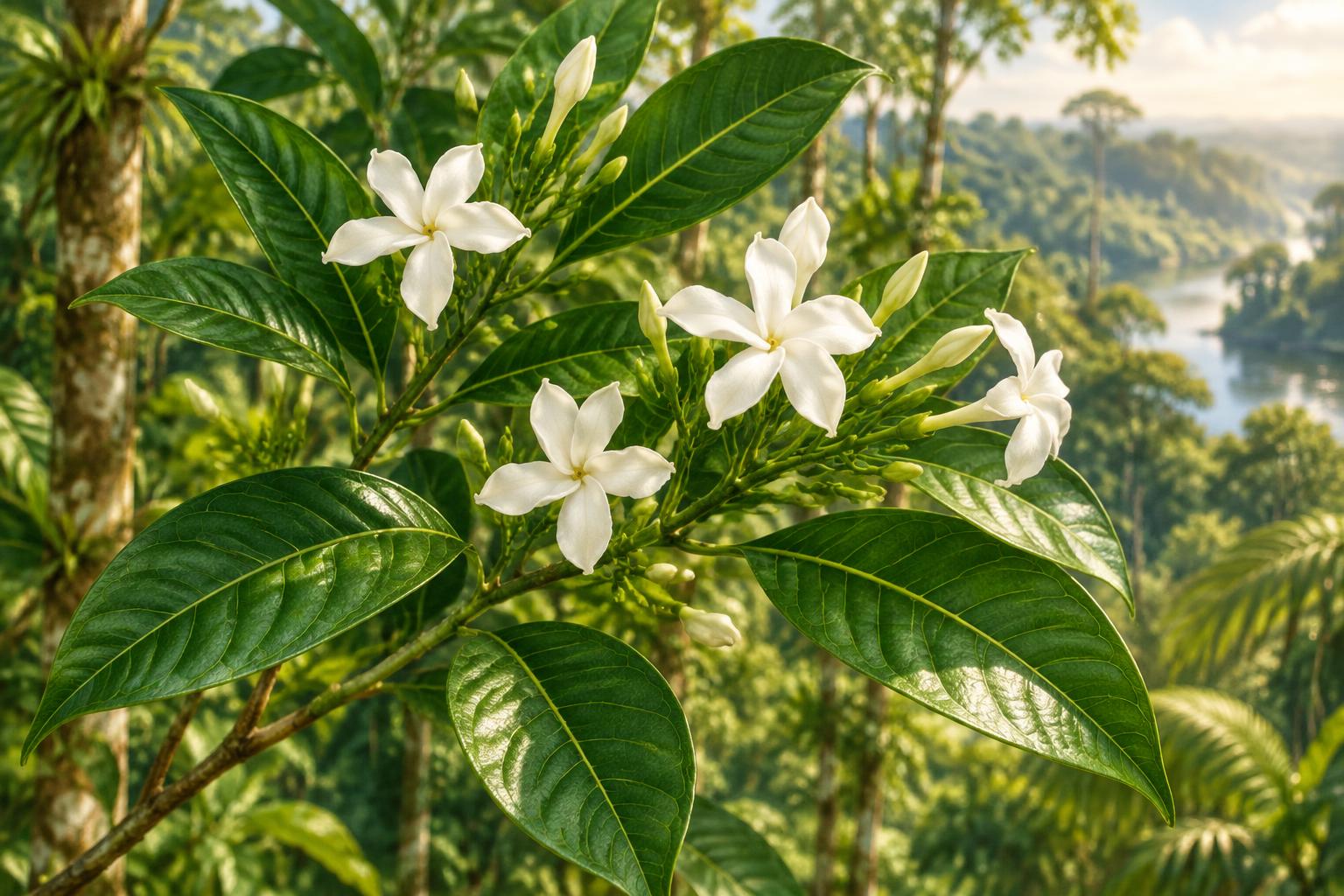
Sananga is commonly prepared from plants identified as Tabernaemontana undulata or related species, although preparations and botanical identification can vary between traditions.
Unlike iboga, which is associated with autobiographical reflection, or kambo, which produces pronounced systemic physiological responses, sananga offers a different avenue of exploration.
Iboga invites us to examine the stories held within consciousness. Kambo invites us to observe the body's internal communication. Sananga invites us to explore the relationship between perception, attention, and the way consciousness interprets the world.
Within Therapeutic Love, the inquiry extends beyond eyesight itself. We are interested in the communication between the eyes, brain, nervous system, emotional conditioning, and conscious awareness.
1. Vision is a neurological experience, not simply an optical process
The human eye is an extraordinary sensory organ, but vision does not occur in the eye alone.
Light enters through the cornea and lens before reaching the retina, where photoreceptors convert light into electrical signals.
Those signals travel through retinal circuits and the optic nerve toward the brain, where multiple regions participate in constructing our visual experience.
The brain does not simply receive a photograph of the external world. It interprets incoming information through attention, memory, expectation, and previous experience.
This makes vision an important doorway into understanding consciousness.
Consider how two people can witness the same event and interpret it completely differently.
Their eyes may receive similar visual information, yet their nervous systems assign different meanings to what they observe.
This raises our first question:
Are we seeing the world as it is, or are we seeing the world through the accumulated conditioning of our nervous system?
Sananga provides an interesting context for exploring the distinction between sensory input and conscious interpretation.
2. The optic nerve, brain, and sensory communication
The optic nerve contains approximately one million retinal ganglion cell axons that carry visual information toward the brain.
These signals reach several important neurological structures.
- Lateral geniculate nucleus: A major relay station for visual information traveling toward the visual cortex.
- Visual cortex: Processes visual features including orientation, movement, contrast, and spatial relationships.
- Superior colliculus: Participates in visual attention, orienting responses, and eye movements.
- Prefrontal networks: Contribute to attention, interpretation, and conscious decision-making.
- Amygdala: Helps assign emotional significance to certain visual information.
This is important because visual perception and emotional processing are interconnected.
A facial expression, movement, or unfamiliar environment can influence physiological arousal before a person has consciously analyzed what they are seeing.
Within our framework, sananga raises an intriguing possibility.
Could an intense sensory experience make us more aware of how rapidly the nervous system responds to incoming information?
Rather than assuming the experience changes the optic nerve itself, we can explore whether it changes the person's awareness of perception.
3. The trigeminal nerve and the body's sensory response
One of the most relevant neurological pathways for understanding sananga is the trigeminal nerve, specifically its ophthalmic branch.
The cornea is among the most densely innervated tissues in the human body.
Its sensory nerve endings detect mechanical, chemical, and thermal stimulation, helping protect the eye.
When sananga contacts the ocular surface, it can produce intense burning, tearing, and involuntary eyelid closure.
These responses involve sensory signaling through the trigeminal system and reflex circuits within the brainstem.
The experience can also influence breathing patterns, facial muscle activity, attention, and autonomic arousal.
This gives us an opportunity to explore an important relationship:
What happens within consciousness when the nervous system receives a powerful sensory signal that demands immediate attention?
The sensation itself is a physiological event.
The emotional interpretation of that sensation is another layer of experience.
The distinction matters because sensory intensity is not necessarily evidence of healing, improved vision, or nervous-system repair.
What interests us is how perception and interpretation interact.
4. The autonomic nervous system and conscious observation
Our autonomic nervous system continuously responds to sensory information.
An unexpected sensation can activate alerting mechanisms, alter breathing, increase muscle tension, and influence cardiovascular activity.
The parasympathetic nervous system also participates in ocular functions, including tear production and pupillary regulation.
Sananga provides a context for examining how quickly the body organizes a response to intense stimulation.
Within Therapeutic Love, this connects to the concept of biological safety.
A nervous system shaped by previous experiences may interpret certain sensations through patterns of anticipation, fear, resistance, or vigilance.
But conscious awareness can begin recognizing these interpretations.
Consider the distinction between:
“This sensation is happening, and I am observing my body's response.”
And:
“This sensation defines my entire experience, and I must react to it.”
The first perspective introduces the possibility of observation.
The second reflects a more automatic identification with the experience.
Our inquiry is whether developing awareness of these differences can influence how someone responds to future sensory and emotional experiences.
This does not mean ignoring protective responses. Ocular pain, in particular, carries important biological information.
5. Attention, sensory processing, and the present moment
One of the most interesting aspects of intense sensory experiences is their ability to redirect attention.
During ordinary life, attention frequently moves between memories of the past and expectations about the future.
The brain's default mode network participates in self-referential thought, autobiographical processing, and internal mental activity.
Salience and attention networks help determine which information receives priority.
An intense sensation can temporarily dominate awareness, drawing attention toward immediate bodily experience.
This provides an interesting parallel with certain meditation practices.
In meditation, we may intentionally direct awareness toward breathing, bodily sensation, or sensory experience.
With sananga, intense ocular sensations may demand attention without deliberate effort.
The question is whether someone can use that moment to observe the relationship between sensation, thought, and awareness.
Can a powerful sensory event reveal how quickly the mind creates meaning around physical experience?
This is a question about consciousness and attention, rather than a claim that sananga produces a particular meditative brainwave state.
6. Neuroplasticity and the possibility of perceptual adaptation
Neuroplasticity describes the nervous system's capacity to modify its organization and responses through experience.
Our perceptual systems are continuously shaped by learning.
Visual attention, sensory discrimination, emotional associations, and expectations can all change through repeated experiences.
Sananga has not been demonstrated to produce lasting neuroplastic changes or improve visual processing in controlled human studies.
However, its relationship with intense sensory attention creates an opportunity to explore how conscious interpretation and learning may interact.
A person might become aware of how they anticipate discomfort, resist unfamiliar experiences, or attach emotional meaning to bodily sensations.
That recognition could become part of a broader self-inquiry process.
The potential pathway is not necessarily a direct chemical effect on neuroplasticity.
Instead, it may involve the relationship between experience, awareness, reflection, and subsequent learning.
Sensory stimulation
Ocular and trigeminal nerve signaling
Heightened attention
Awareness directed toward immediate experience
Conscious observation
Recognizing thoughts, emotions, and automatic responses
Reflection and integration
Exploring how perception influences behavior
Potential adaptation
Greater awareness of sensory and emotional patterns
This sequence represents a conceptual pathway for inquiry, not an established physiological outcome of sananga.
7. The relationship between vision, emotion, and memory
Visual information is deeply connected with emotional memory.
The brain learns to associate certain images, expressions, and environments with previous experiences.
For example, someone who experienced threatening facial expressions during childhood may develop heightened sensitivity to similar expressions later in life.
The visual system detects the information, but emotional memory influences its significance.
This is one reason that perception cannot be understood solely through the anatomy of the eye.
Within Therapeutic Love, we can explore the relationship between what someone sees, how the nervous system interprets it, and the emotional response that follows.
Sananga's association with visual clarity in traditional contexts provides a meaningful symbolic starting point for this inquiry.
What does it mean to see clearly?
Does clarity refer only to the physical ability to distinguish objects?
Or can it also refer to recognizing the assumptions and emotional conditioning through which we interpret experience?
These are different forms of clarity, but both are relevant to self-understanding.
8. The spiritual symbolism of sight and inner vision
Across many spiritual traditions, sight represents more than physical vision.
The eye has been used symbolically to represent awareness, intuition, wisdom, and the ability to perceive beyond habitual appearances.
Within Amazonian traditions, sananga may be associated with cleansing, preparation, focus, and spiritual clarity.
These meanings deserve to be understood within their own cultural contexts rather than reduced to modern neurological terminology.
At the same time, they invite questions that resonate with the Therapeutic Love framework.
What are we unwilling to see about ourselves?
What patterns have become so familiar that we no longer recognize them?
Can greater awareness reveal the difference between what is happening and what we believe is happening?
Are we responding to the present moment, or interpreting it through memories of the past?
The symbolism of sight provides a powerful language for self-inquiry.
Sometimes clarity is not about seeing something new. It is about recognizing what has been in front of us all along.
9. The immune system, ocular surface, and biological communication
The eye has specialized immune and inflammatory regulatory mechanisms.
Its surface includes epithelial barriers, tear-film components, sensory nerves, and local immune cells that help maintain tissue integrity.
The cornea also communicates with the nervous system through neuropeptides and other signaling molecules.
This creates an interesting intersection between sensory neuroscience and neuroimmunology.
Certain Tabernaemontana species contain indole alkaloids, and compounds from this plant genus have been investigated for various biological activities in laboratory settings.
However, the exact composition of traditional sananga preparations varies, and findings involving isolated compounds do not establish therapeutic effects from applying those preparations to the eye.
Within our framework, the relevant questions concern how ocular sensory nerves, local immune responses, and central nervous-system pathways communicate.
This offers a legitimate area for scientific exploration without assuming that inflammation or irritation represents a cleansing process.
10. Sananga and the human operating system
Within the Owner's Manual for Being Human, sananga can be explored through several interconnected systems.
- Conscious awareness: Observing the relationship between sensation and interpretation
- Visual nervous system: Retinal signaling and visual processing
- Trigeminal nerve: Ocular sensation and protective reflexes
- Autonomic nervous system: Responses to intense sensory stimulation
- Attention networks: Awareness, salience, and present-moment focus
- Emotional memory: Learned associations that influence perception
- Neuroplasticity: Learning and adaptation through conscious experience
- Neuroimmune communication: Interaction between ocular nerves and local immune activity
- Spiritual inquiry: Clarity, perception, intuition, and inner vision
The deeper principle is that vision, emotion, and consciousness are not isolated processes.
They continuously influence one another.
11. Questions for self-inquiry and integration
- What does it mean for me to see clearly, beyond physical eyesight?
- How often do I interpret the present moment through expectations created by my past?
- What happens within my mind when an unfamiliar sensation demands my attention?
- Can I distinguish the physical sensation from the story I create around it?
- Are there aspects of myself or my life that I have avoided examining?
- How do fear, anticipation, and emotional memory influence what I perceive?
- What changes when I approach an experience with curiosity rather than immediate judgment?
- Can greater awareness of my perceptual habits help me respond differently in everyday life?
- What does inner vision mean within my own spiritual understanding?
- How might I practice seeing familiar experiences from a different perspective?
12. The deeper possibility
Sananga invites us to examine one of the most fundamental relationships in human existence: the relationship between perception and reality.
Our eyes gather information from the world around us.
Our nervous system organizes that information.
Our memories and emotional conditioning influence its meaning.
And consciousness experiences the result.
What we call reality is therefore experienced through a continuous interaction between incoming sensory information and the nervous system's interpretation.
Within Therapeutic Love, the deeper exploration is not simply whether sananga changes eyesight.
It is whether the experience can inspire greater awareness of how perception, emotion, and conditioned responses shape our lives.
Iboga invites us to examine the memories and stories through which we understand ourselves.
Kambo invites us to explore the body's internal communication and our relationship with physiological sensation.
Sananga invites us to examine the lens through which we perceive the world.
Each approaches human experience from a different direction.
Yet all three lead toward a common inquiry:
If our nervous system has learned to perceive and respond to the world through past experience, what becomes possible when consciousness begins recognizing those patterns?
Perhaps seeing clearly begins with recognizing that perception is not passive.
It is an active relationship between the world, the body, the brain, and the conscious observer.
And perhaps some of the most meaningful changes in our lives begin not when the world around us changes, but when we begin seeing it differently.
Therapeutic Love — Modern Science, Ancient Wisdom, and Biological Safety
An exploratory framework examining sananga through sensory neuroscience, conscious awareness, emotional conditioning, spiritual inquiry, and the human capacity for adaptation.